








Food Ordering App Development Company CISIN is a food ordering app development company that builds custom ordering apps for restaurants, chains, cloud kitchens and delivery startups. Each build covers a customer app for iOS and Android, a restaurant panel, a driver app and an admin dashboard. A first version with ordering, payment and tracking usually goes live in 3 to 5 months.
Get a Free Project EstimateWhat Our Food Ordering App Development Includes
Your customers browse the menu, customize an order, pay and track it to the door in the customer app. Your kitchen sees each order the moment it is placed in the restaurant panel, marks it ready and hands it to a driver.
Drivers accept jobs, follow the route and confirm delivery in the driver app. You run all of it from the admin dashboard: menus, prices, delivery zones, promotions, payouts and reports.
Already using DoorDash or Uber Eats? Many restaurants we work with keep the marketplaces for discovery and use their own app for repeat customers, where they keep the full order value and the customer data. The two run side by side, and the admin dashboard shows orders from your own app in one place.
Who We Build Custom Food Ordering Apps For
We build custom food ordering apps for four kinds of food business. Single restaurants that want their own branded ordering app instead of paying a commission on every order. Restaurant chains that need one app for many locations, each with its own menu, prices and opening hours. Cloud kitchens running several brands from one kitchen, with one order screen for staff. And startups launching a multi-restaurant delivery marketplace or a community platform, like Zvonr, the homemade food marketplace we built for iOS, Android and web.
Custom Food Ordering App or White Label: How We Start
If you need to launch fast with standard ordering features, we start from proven ordering modules and brand them as yours. If your business model is different (a subscription meal plan, a multi-brand kitchen, a marketplace with its own commission rules), we build it custom.
Either way, you own the source code and the app store listings, and we agree the scope, timeline and price in writing before development starts. A white label launch typically goes live in weeks rather than months; a custom food ordering app takes longer because every screen is designed for your business, which is why we help you pick the right route in the first scoping call.
Food Ordering App Integration With Your POS, Payments and Delivery Partners
An ordering app only saves time if orders flow straight into the systems your staff already use. We connect your food ordering app to your point of sale so online orders print in the kitchen like any other ticket, to payment gateways such as Stripe and PayPal, to Google Maps for addresses and live tracking, and to third-party delivery providers if you do not run your own drivers. Before we quote, we check which of your current systems offer an API, so the price includes every connection you need and nothing is left for later.
Your Own Restaurant Ordering App vs DoorDash and Uber Eats
Marketplace apps typically charge restaurants a commission of 15 to 30 percent per order and keep the customer relationship. With your own restaurant ordering app you keep the order value, you own the customer list, and you decide on loyalty offers and push notifications yourself. Most restaurants do not leave the marketplaces: they use them to be found and move regular customers to their own app with a first-order discount or loyalty points, so each repeat order costs no commission.
The Food Ordering App Developers on Your Project
Your project is run by a dedicated team of CISIN employees, not freelancers: a project manager, a UI/UX designer, mobile and backend developers who have built food ordering apps before, and a QA engineer who tests every release on real iPhone and Android devices. You can start with a paid 2-week trial, and if a team member is not a fit we replace them at no extra cost. You talk to the same project manager from the first call to launch.
Food Ordering and Delivery App Problems We Solve
-

Customers who order once and never return
We build in loyalty points, saved favorites, one-tap reorder and targeted push offers, so you can bring a customer back without paying a marketplace to do it.
-
Menu prices that are hard to keep current
Prices, item availability and delivery fees are edited in the admin dashboard and update in the app instantly, with separate price lists per location if you need them.
-
Competing with Uber Eats and DoorDash
Your own app will not out-advertise the big marketplaces. It wins on repeat customers: lower prices than the marketplace menu, your own rewards, and no 15 to 30 percent commission on every order.
-
Delivery zones and routes
You draw delivery zones on a map, set a fee and minimum order for each, and the app assigns orders to the nearest available driver.
-
Knowing when something went wrong
Ratings on every order, photo complaints and a support chat flag problems to the right location manager the same day, not in a review a week later.
-
Online orders swamping the kitchen at peak times
Prep-time settings, order throttling and scheduled orders let the kitchen limit online orders per time slot so dine-in guests are not kept waiting.
-
Managing drivers
Driver onboarding with document upload, live location, delivery photos and per-driver reports show you who delivers on time, and payouts are calculated automatically.
-
Checkout that loses orders
We design and test the path from menu to payment first, keeping checkout to as few steps as possible with saved addresses, Apple Pay and Google Pay.
-
Growing past the first version
We build on a backend that can add new locations, brands and features later, so version two is an update, not a rebuild.


Watch a CISIN Food Ordering System in Action



What Every Food Ordering App Development Project Includes
-
Your brand, your app store listing
The apps carry your name, logo and colors and are published under your own Apple App Store and Google Play accounts.
-
Cards, wallets and cash on delivery
Card payments, Apple Pay, Google Pay, wallet balance and cash on delivery, through the payment gateway you already use, with refunds handled from the admin dashboard.
-
How projects are priced
Fixed price for a clearly defined first version, time and materials when the scope will change, or a dedicated team billed monthly for ongoing work.
-
Multiple languages and currencies
Menus, the app interface and receipts in more than one language, including right-to-left languages such as Arabic, with local currencies and taxes.
-
Your own drivers or a delivery partner
Run deliveries with your own drivers, hand them to a third-party courier through its API, or mix both by zone or time of day.
-
Instant order alerts
New orders ring on the restaurant tablet and print in the kitchen, and the customer gets a notification at each step: accepted, ready, on the way, delivered.
-
Live order tracking
Customers follow the driver on a map from the restaurant to their door, which cuts down on where-is-my-order calls to your staff.
-
Multi-location management
One dashboard for every location, with its own menu, opening hours, delivery area and sales report, and head-office reporting across all of them.
-
App store submission
We prepare the store listings, screenshots and privacy details and handle Apple and Google review until both apps are live under your accounts.
-
Promotions and push notifications
Create discount codes, first-order offers and push campaigns from the admin dashboard and see how many orders each one brought in.
-
What a food ordering app costs
A basic food ordering app with a customer app, restaurant panel and admin dashboard typically costs $20,000 to $50,000, depending on scope. A multi-restaurant marketplace with a driver app, live tracking and integrations can go above that, and we give you a fixed quote after a free scoping call.
-
Support after launch
After launch we monitor the apps, fix bugs, release updates for new iOS and Android versions and add features on a monthly support plan.


Why Restaurants Choose CISIN as Their Food Ordering App Development Company
-
Food delivery apps built at Careem's scale
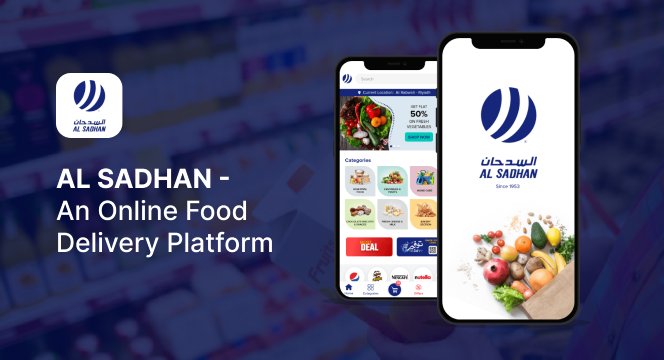
CISIN built the customer app, delivery driver app, restaurant web app and admin panel for Careem's food delivery service and shipped more than 50 releases. We also built Al Sadhan's food delivery platform and Zvonr's homemade food marketplace.
-
Try the team for 2 weeks first
Start with a paid 2-week trial on your own project. If the work is not what you expected, you stop there. If one developer is not a fit, we replace them at no extra cost.
-
You own the code and the app store listings
Both apps are published under your Apple and Google accounts and the full source code is handed over to you, so you can move to another team at any time without rebuilding.
-
A fixed quote, then a working build every 2 weeks
After a free scoping call you get a written feature list and a fixed price. During the build you test a working version every one or two weeks with your named project manager.


Food Ordering App Features for Customers, Drivers, Restaurants and Admins
-
Coupons
Customers apply discount codes and first-order offers at checkout.
-
Menu photos
Every dish can carry photos, a description, allergens and add-ons.
-
Social sign-in
Customers sign up with Apple, Google or a phone number in a few taps.
-
Menu and search
Search and filter by cuisine, dietary needs, price and delivery time.
-
Language and currency
The app shows the menu in the customer's language and local currency.
-
Pickup or delivery
Customers choose delivery, pickup or a scheduled time for later.
-
Loyalty rewards
Points on every order that customers redeem on their next one.
-
Order tracking
Live map tracking and status notifications from kitchen to door.
-
Sign-up
Drivers register with a phone number and verification code.
-
Documents
Drivers upload a license and vehicle details for approval.
-
Accept or decline jobs
Drivers see the pickup, drop-off and fee before accepting.
-
Earnings
Drivers see earnings, tips and payout history per day and week.
-
Delivery history
A record of every completed and declined delivery.
-
Navigation
Turn-by-turn directions to the restaurant and the customer.
-
Restaurant sign-up
On a marketplace, restaurants apply to join and are approved by the admin.
-
Store details
Update opening hours, holiday closures, photos and contact details.
-
New order alerts
A sound and on-screen alert the moment an order comes in.
-
Order queue
Accept, prepare and mark orders ready, with prep times per item.
-
Payouts
See paid, pending and upcoming payouts for every order.
-
Customer notes
Delivery instructions and order history for each customer.
-
Specials
Run daily specials and limited-time menu items.
-
Menu editor
Add, edit, price and pause items, or mark them sold out.
-
Support chat
Answer customer questions about an order in the app.
-
Cuisines and categories
Organize restaurants and dishes into cuisines and categories.
-
Restaurant management
Approve restaurants, set commissions and delivery areas.
-
Menu control
Review and publish menus across all restaurants.
-
Reports
Sales, average order value, delivery times and top items by location.
-
Notifications
Send push, email and SMS messages to customers, drivers or restaurants.
Food Ordering App Development: Common Questions

How much does it cost to build a food ordering app?
A basic food ordering app with a customer app, restaurant panel and admin dashboard typically costs $20,000 to $50,000 at CISIN, depending on scope. The price goes up with a driver app, multi-restaurant marketplace features, POS and delivery-partner integrations, and multiple languages. We give a fixed quote after a free scoping call, once the feature list is agreed.
How long does it take to develop a food ordering app?
A first version with the customer app, restaurant panel, driver app and admin dashboard usually takes 3 to 5 months at CISIN. A platform with loyalty, POS integration and advanced search takes about 6 to 9 months, and a multi-country, multi-language platform takes 10 months or more.
Should my restaurant build its own app or stay on DoorDash and Uber Eats?
Most restaurants do both. Marketplaces bring new customers but take a commission on each order, typically 15 to 30 percent. Your own app is for the customers who already know you: you keep the full order value, own the customer data and can reward repeat orders. The usual move is to keep the marketplaces for discovery and push regulars to your app.
Is a white label food ordering app better than a custom build?
A white label app is faster and cheaper to launch because it reuses ready-made ordering modules, which suits a restaurant or chain with a standard ordering flow. A custom build makes sense when your model is different, for example a marketplace with its own commission rules, meal subscriptions or a multi-brand kitchen. At CISIN you own the source code either way.
Can the app connect to our existing POS system?
Yes. We connect your food ordering app to your point of sale so online orders appear in the same system as in-store orders and print in the kitchen. Before quoting, we check whether your POS provider offers an API for online orders, because that decides how the connection is built and how long it takes. Common restaurant POS systems such as Square, Toast and Clover offer one.
Do you build for both iOS and Android?
Yes. Most food ordering apps we build use a cross-platform framework such as Flutter or React Native, so one codebase runs on iPhone and Android and launches on both app stores the same week. That keeps the build and later updates cheaper than two separate apps. For very high-volume platforms we can build fully native apps instead.
Who owns the app and the source code?
You do. When CISIN builds your food ordering app, the apps are published under your own Apple App Store and Google Play accounts, and the full source code, design files and server access are handed over at launch. You are free to keep working with us, bring the app in-house or move to another team without starting again.
How do you keep payments and customer data secure?
Card payments go through PCI DSS compliant gateways such as Stripe, so card numbers never touch your servers. All traffic between the apps and the backend is encrypted with HTTPS, customer accounts use secure sign-in, and staff access to the admin dashboard is limited by role. Every release is tested before it reaches the app stores.
What happens after the app launches?
After launch, CISIN monitors the apps, fixes bugs, updates them for each new iOS and Android release and adds features on a monthly support plan. Most restaurants add loyalty rewards, new locations or delivery partners in the first year. As the product grows you can switch to a dedicated CISIN team billed monthly.
How do I choose a food ordering app development company?
Ask to see food ordering apps the company has already put in the app stores, and talk to one of those customers. Check that you will own the source code and the store listings, that the quote is a written fixed price for an agreed feature list, and that you will test a working build every few weeks. A good development partner will also ask about your POS and delivery setup before it quotes.
Our Food Ordering App Development Process
Four stages, from a free scoping call to a live app in the Apple App Store and Google Play, usually in 3 to 5 months for a first version.
-
Scoping and fixed quote (week 1)
In a free call we map your ordering flow, locations, POS and delivery setup. Within a week you get a written feature list, a timeline and a fixed price for the first version.
-
Design you can click through (weeks 2 to 4)
We design clickable screens for the customer app, restaurant panel and driver app. You test them on your phone and ask for changes before any code is written.
-
Build and test (months 2 to 4)
We build in short sprints and send a working version to try every one or two weeks. Every release is tested on real iPhone and Android devices before you see it.
-
Launch and support
We publish both apps under your store accounts, set up your restaurants and menus and train your staff. After launch we fix bugs and add features on a monthly plan.


Other Industries We Build Apps For


Case Studies
See how CIS help in Enterprises success


Online Transport Marketplace for Different Transport Requirements
Read more →
Client Testimonials
Our Success Lies in the Success of our Clients
-
Nicolas
...
I’ve outsourced my joomla CMS website development project to Cyber Infrastructure Inc. I would just like to thank you for the good work you did. It was really efficient and understanding all the things we need, really great. We will come back for
Ghio
Lemmer, Netherlands
I am glad to write a review for your capable team, you have onboard and I would like to mention another thing that your technology team is good for your company. Thanks for everything. Soon we'll be outsourcing more projects to you.
Paul
...
I’ve hired CISIN a while ago and I want to say that thanks for your help, everything is great & much appreciated. I’m always open to any design upgrades you may like to punt in future so feel free. I wish you peace & success in every sphere, thanks again.
-
Simon
...
I am a Research Director for a company in the UK which monitors company’s customer service and provides feedback on their performance and shows benchmarking data for their continual improvement. With that background I am pleased to say that the customer service I received from you just now was excellent!
JimMc
Scotland, United Kingdom
Super Work The application is better than I expected it to be. This was quite a fluid arrangement as I was not totally sure what I required, Abhi and the rest of his team were very patient and discussed all aspects of the project with me. Any changes I requested
Leonard
North Carolina, United States
Did a great job, and in time asked for it. The Parental control application I was looking at was a single module in the final product. Very innovative with ideas and implementations. Thanks!
-
David
United Kingdom
Very diligent and hard-working. When given sufficient information, we were able to produce a good-quality product in a quick time. Would use them again.
Rossk
New York, United States
Outstanding work even with some of the last minute changes they coded the program changes without any problems.
Mike
Georgia, United States
Amit and team did a superb job, and did much more than they were required. Communication is very professional. Recommend these guys every time. I will use it again.
-
Mark
Florida, United States
Superb Communication will go the extra mile to please and best of all the quality of code is excellent! Thanks CIS!
Russell
Australia
A+ coding yet again. CIS is quick to respond to bugs and even quicker to fix them. I really enjoy the professionalism and dedication of this team!
RonnieO
Illinois, United States
CIS did an excellent job on my project. I gave them a week to get it done and they got it done within 1 day! They are very knowledgeable and easy to get in touch with. I definitely plan to use them in the future.
-
Rick
United Kingdom
Wow, that took a long time and was complicated! Cis team did a good job in the end and thanks for your work.
Jean-Luc
Antwerp,Belgium
Thanks! This is only the start. We are bound to do great things together.
Nicolas
...
I’ve outsourced my joomla CMS website development project to Cyber Infrastructure Inc. I would just like to thank you for the good work you did. It was really efficient and understanding all the things we need, really great. We will come back for















Frequently Asked Questions (FAQs)
Have a question? Contact us, and we'll ensure you get a response within one business day.
A basic food ordering app with a customer app, restaurant panel and admin dashboard typically costs $20,000 to $50,000 at CISIN, depending on scope. The price goes up with a driver app, multi-restaurant marketplace features, POS and delivery-partner integrations, and multiple languages. We give a fixed quote after a free scoping call, once the feature list is agreed.
A first version with the customer app, restaurant panel, driver app and admin dashboard usually takes 3 to 5 months at CISIN. A platform with loyalty, POS integration and advanced search takes about 6 to 9 months, and a multi-country, multi-language platform takes 10 months or more.
Most restaurants do both. Marketplaces bring new customers but take a commission on each order, typically 15 to 30 percent. Your own app is for the customers who already know you: you keep the full order value, own the customer data and can reward repeat orders. The usual move is to keep the marketplaces for discovery and push regulars to your app.
A white label app is faster and cheaper to launch because it reuses ready-made ordering modules, which suits a restaurant or chain with a standard ordering flow. A custom build makes sense when your model is different, for example a marketplace with its own commission rules, meal subscriptions or a multi-brand kitchen. At CISIN you own the source code either way.
Yes. We connect your food ordering app to your point of sale so online orders appear in the same system as in-store orders and print in the kitchen. Before quoting, we check whether your POS provider offers an API for online orders, because that decides how the connection is built and how long it takes. Common restaurant POS systems such as Square, Toast and Clover offer one.
Yes. Most food ordering apps we build use a cross-platform framework such as Flutter or React Native, so one codebase runs on iPhone and Android and launches on both app stores the same week. That keeps the build and later updates cheaper than two separate apps. For very high-volume platforms we can build fully native apps instead.
You do. When CISIN builds your food ordering app, the apps are published under your own Apple App Store and Google Play accounts, and the full source code, design files and server access are handed over at launch. You are free to keep working with us, bring the app in-house or move to another team without starting again.
Card payments go through PCI DSS compliant gateways such as Stripe, so card numbers never touch your servers. All traffic between the apps and the backend is encrypted with HTTPS, customer accounts use secure sign-in, and staff access to the admin dashboard is limited by role. Every release is tested before it reaches the app stores.
After launch, CISIN monitors the apps, fixes bugs, updates them for each new iOS and Android release and adds features on a monthly support plan. Most restaurants add loyalty rewards, new locations or delivery partners in the first year. As the product grows you can switch to a dedicated CISIN team billed monthly.
Ask to see food ordering apps the company has already put in the app stores, and talk to one of those customers. Check that you will own the source code and the store listings, that the quote is a written fixed price for an agreed feature list, and that you will test a working build every few weeks. A good development partner will also ask about your POS and delivery setup before it quotes.
We pick the stack per project. Recent CISIN food projects used Flutter and React Native for the mobile apps, Next.js, Vue.js and Angular for web panels, Ruby on Rails and C# for the backend, RabbitMQ for order messaging and AWS for hosting. For a new restaurant app we usually recommend Flutter with a cloud backend, so one codebase covers iPhone and Android.
Yes. Each location gets its own menu, prices, opening hours and delivery area inside one app, and orders route to the right kitchen by the customer's address or chosen store. Head office sees sales and delivery times for every location on one dashboard and can push chain-wide offers or location-only specials.
We build the privacy features these laws expect: clear consent screens, a privacy policy link at sign-up, a way for customers to download or delete their data, and limits on what staff can see. Which law applies depends on where your customers are, so we agree the privacy requirements during scoping and build them into the first version.
Technical Expertise






Our Clients






Reviewed by CISIN's Industry Experts
Content reviewed by professionals with relevant technical and industry expertise.